Massachusetts College of Art and Design

PROJECTS 2026
SymBio Suit
FINALIST PROJECT
Fiona Morris, Jackson Ryan, Sakeena Williams, Nev Strawbridge, Janet Tan
The skincare industry thrives on consumption — yet the more products layered onto skin, the more the body's invisible microbial ecosystem is disrupted. SymBio Suit proposes a radical alternative: a modular sleep garment embedded with adaptive, movable bio-patches that map, learn, and rebalance the skin's microbiome overnight. Rather than applying synthetic compounds from the outside, the suit works in dialogue with the body's own biological intelligence. It challenges the assumption that skin health requires constant chemical intervention, suggesting instead that restoration happens through listening. SymBio Suit reimagines the garment as a living interface between the body and its microbial self.
The Synthetic Biologists' Union
Nonfinalist Project
Nora Connolly, Evelynn Powers, Sam Fraley, Kayla Nguyen
Our project is a speculative social critique investigating the current direction Synthetic Biology is headed as an emerging field. We are drawing comparisons to the evolution of the Synthetic Chemistry industry, which has historic parallels to today's modern trends. We are highlighting positive changes we have seen since the 1800s, but simultaneously alternative business methods we want to see more of today and believe that this industry is poised to engage further in. We are proposing company-level changes that will lead to larger change, in the same way that each new biodesign product leads incrementally towards larger change. This is a call to action for groups that call themselves biodesign companies to operate outside of the current system, in the same way that the synthetic chemistry revolution shocked the structures that were in place when it emerged. How can buying into capitalism help people? How can it help the earth?
Circular Home
Nonfinalist Project
Malia Rodriguez, Caleb Smith, Miroslava Polyakova-Grigorieva, Laurel Krick, Leon Grossman
This project aims to reform the home as a homeostatic environment by bolstering the other members of the ecosystem so that a steady state symbiosis that reflects our modern material reality is reached. This will be undertaken through an analysis of the inputs and outputs of organisms that can be used to conceptualize a home that has its own sense of center.
Instructors 2026
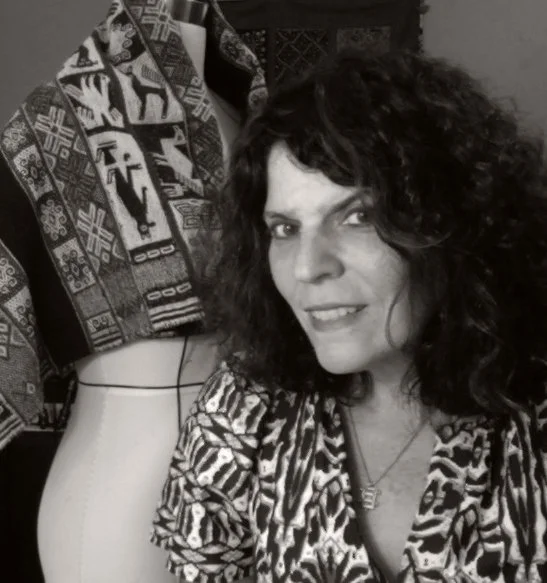
Jennifer Varekamp